Home
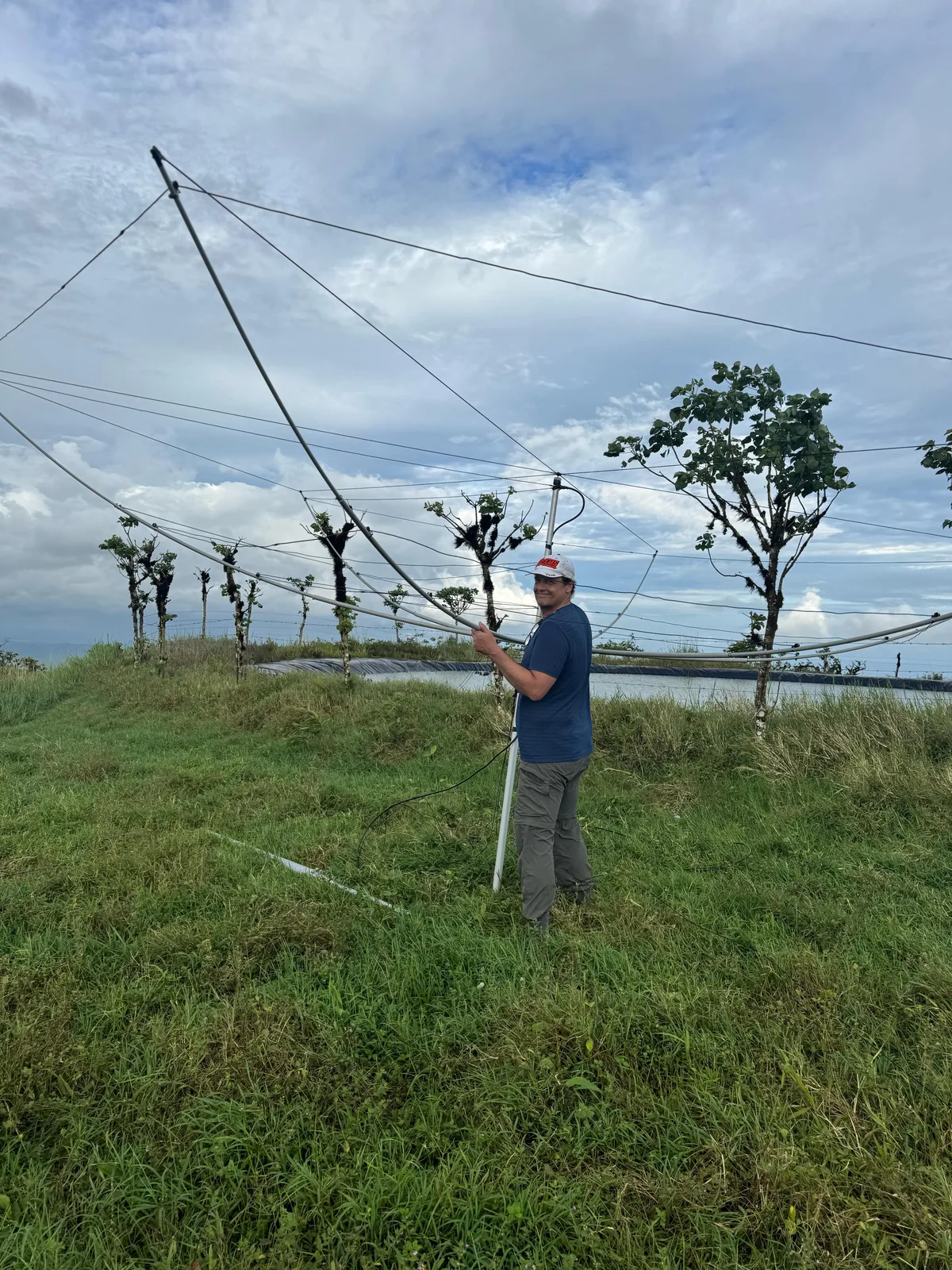
I first learned about amateur radio when I was six years old. My father gave me a CB HT transceiver (Hosiden) with a big telescopic antenna as a present. With it, I was able to talk to people from all over the world at the peak of that sunspot cycle. I learned CW when I was eight years old, using a very old straight key (circa 1860) and a modified AM radio as an oscillator. At that time I did a lot of broadcast and MW SWLing.
Contesting
I started contesting when I was fourteen years old and I am usually active from:
- HD8R
- HC8M
- LP1H
- LT1F
- CE3CT
- other guest / multi-op stations
I had the chance to participate in two World Radio Sport Team Championships:
- Slovenia 2000 as S522R
- Brazil 2006 as PW5A
I like entering multi-op categories in contests, but I like all-out 48-hour single-operator efforts best.
Affiliations
- Member of the CQ World Wide DX Contest Committee
- Founding member of the LU Contest Group (2000)
- CWOps #2896
- World Wide Young Contesters (WWYC) #97 — not so young anymore :-)
- Araucaria DX Group member since 2009
QRQ CW
I like and practice QRQ CW.
- I can send CW by hand at around 60 WPM
- I can copy conversational CW at around 100 WPM
- I can copy callsigns at around 130 WPM
- I can copy random letters at around 160 WPM
DXing and the city QTH
I started DXing from my own station in 2018. I like the challenge of DXing from a small station in the middle of the city, battling man-made noise in every way I can.
Since there is very strong QRM at my location, I usually experiment with one or more noise-cancelling devices and process signals using Linrad and diversity reception with SDRplay Duo.
Currently I only have a few very low dipoles.
FT8
I started experimenting with FT8 in 2020. I simply love FT8. I think it saved ham radio. It is the best tool we have to analyze all sorts of radio-wave propagation mechanisms. The massive volume of data points collected since its inception is amazing. K1JT should receive another Nobel Prize for creating FT8 :-)
Working conditions
Radios and receivers:
- Flex 8600
- Flex 6600
- Hermes Lite 2
- Yaesu FTDX-3000
- Icom IC-746 PRO
- Heathkit SB-102
- SDRplay Duo (SDR receiver)
- Colibri Nano (SDR receiver)
- JPS ANC-4
- QRM Eliminator by SP8RSM (similar to X-Phase)
CW straight keys and bugs
I have a small collection of CW straight keys and semi-automatic keyers (bugs):
- 1860 straight key from the Buenos Aires Telégrafo de la Provincia
- 1916 Vibroplex Blue Racer
- 1936 Electric Specialty Manufacturing Co.
- 1942 J38
- 1944 Telegraph Apparatus Co.
- 1946 Telegraph Apparatus Co.
- 1968 Hi-Mound BK-100
- 2015 Kent iambic paddle
Thanks for stopping by — hope to see you on the bands.
Vy 73,
Martin, LU5DX